Economic & National Security
Why
Now
The United States builds fewer than five oceangoing commercial vessels per year. Reindustrialization demands 265 — not the 92 currently in service. Legacy yards are operating at or near rated capacity sustaining what already exists. There is no capacity to close that gap inside what we have. There must be new yards, built correctly, built now.
265 SHIPS NEEDED. 92 EXIST. NO PATH TO CLOSE IT.
The Jones Act (Merchant Marine Act of 1920) requires that cargo moved between U.S. ports — from the mainland to Hawaii, Alaska, Puerto Rico, and Guam, and coast-to-coast via the Panama Canal — be carried on vessels that are U.S.-built, U.S.-owned, U.S.-flagged, and crewed by U.S. citizens. These are full-size oceangoing vessels transiting thousands of miles of open ocean: large product tankers, containerships, dry bulk carriers, and RoRo vessels. The law exists to maintain domestic maritime commerce capability and an industrial base that can support national security requirements. Today there are 92 Jones Act-eligible oceangoing vessels in service. Economic modeling supports 265.
Domestic reindustrialization supports 265 large oceangoing vessels on deepwater U.S. routes. Operators cannot get ships built at reasonable cost on acceptable timelines.
Against 25–30 needed annually. Legacy yards are operating at or near rated capacity sustaining what already exists — there is no uncommitted capacity available to address the gap.
Not workforce size. End-to-end automated production — humans and machines working in concert — moves dramatically more tonnage through each production slot.
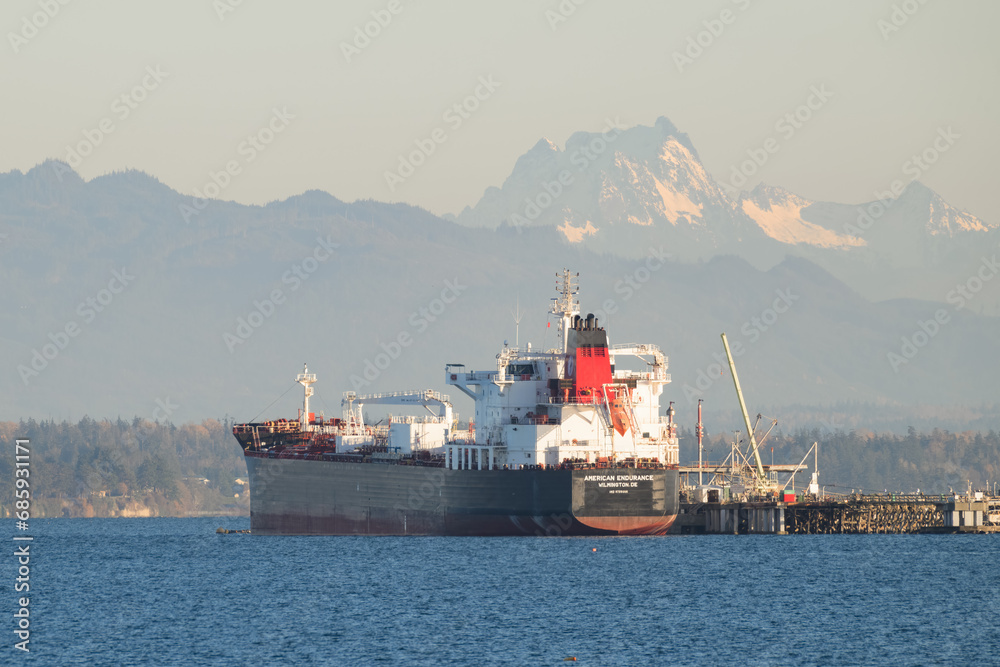
Jones Act operators are not extending vessel service lives because they prefer to. They are doing it because new domestic construction is unavailable at competitive cost and reasonable schedule. A vessel designed for a 25-year service life operating at 30 or 35 years requires repeated structural and mechanical overhauls that exceed the cost differential a modern replacement would carry — but the replacement hull is not available to order on any timeline that matches fleet planning requirements. The result is an aging fleet carrying progressively higher maintenance burden, higher unscheduled downtime risk, and lower cargo efficiency than modern tonnage would provide. The 173-vessel gap between what exists and what the market supports widens every year that domestic production remains at 4–5 hulls annually.
No. U.S. legacy yards are physically constrained in ways that investment alone cannot resolve. They sit on dense urban waterfronts built and extended over more than a century, hemmed in by existing infrastructure, surrounding development, and fixed shoreline. There is no adjacent land available to add production buildings at meaningful scale. Workforce pipelines face geographic and demographic pressures that are not addressable by wage increases alone. This is not a criticism of legacy operators — it is an honest description of why their production ceiling is fixed. New domestic shipbuilding capacity requires a new facility: purpose-designed at industrial scale, on a site with room to build the full production infrastructure, and executed with 4th-generation production technology from the start.
MERCHANT FLEET CAPACITY IS A NATIONAL INTEREST
China, South Korea, and Japan account for ~90% of world shipbuilding output. All three within hypersonic missile range of one another. Contested or eliminated in the opening phase of any Pacific contingency.
When WWI began, European merchant fleets withdrew into national service. U.S. exports sat on docks. The U.S. held 5% of global merchant share at the eve of WWI. It holds less than 1% today.
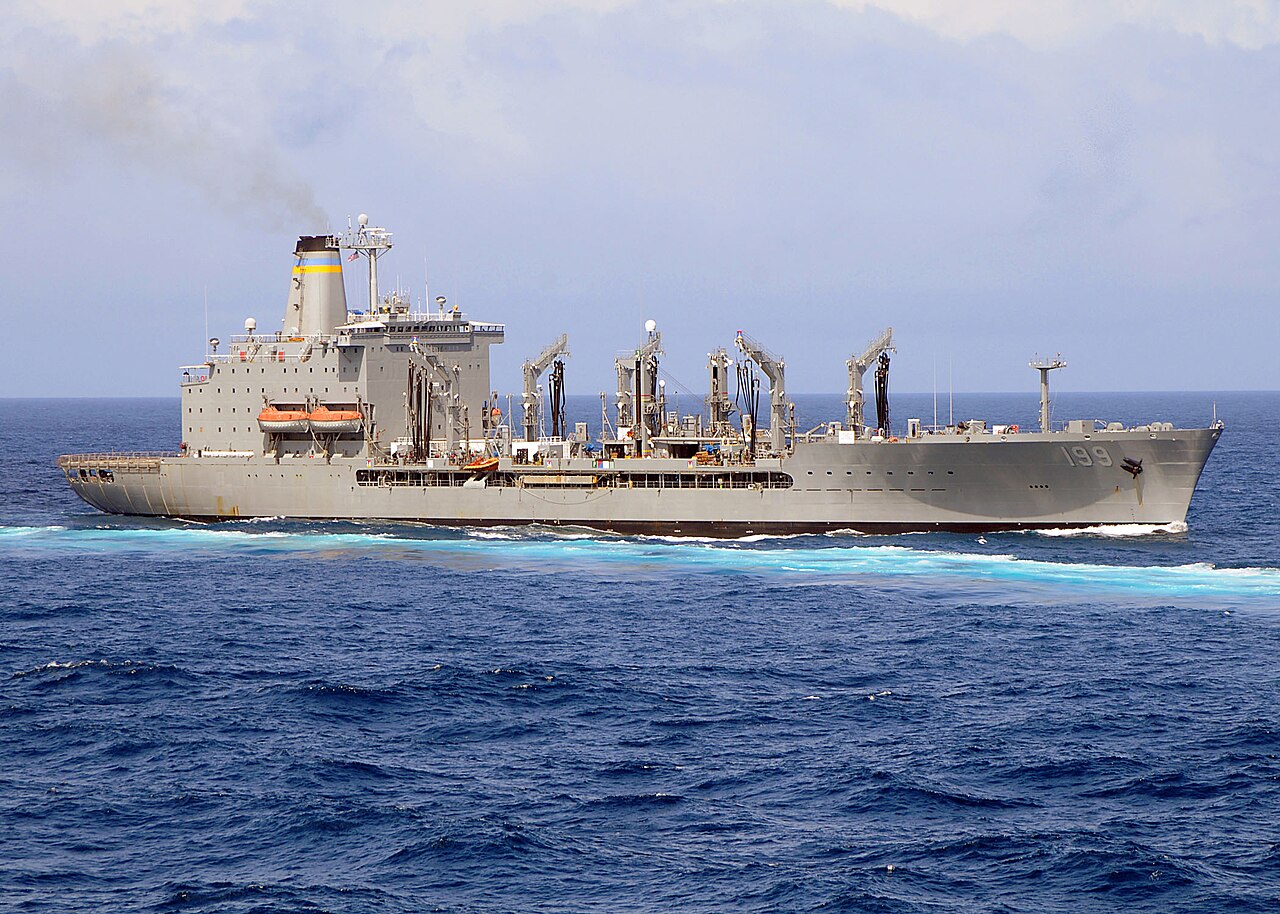
The security argument is routinely reduced to wartime surge production — the ability to build ships fast under mobilization conditions. That is correct but understates the case. Domestic shipbuilding and a robust Jones Act fleet protect four distinct national interests simultaneously: the ability to move cargo between U.S. ports without dependence on foreign carriers subject to political risk; the ability to sustain naval logistics in contested theaters where foreign-flagged auxiliaries cannot operate; the industrial workforce and manufacturing depth that underpins broader maritime capability; and the deterrent signal that comes from demonstrated production credibility. A country with no credible shipbuilding base communicates something specific — and accurate — about the durability of its logistics posture under sustained pressure. Capacity is deterrence before it is ever production.
THE NAVY CANNOT BUILD WHAT IT NEEDS — IN ANY SCENARIO
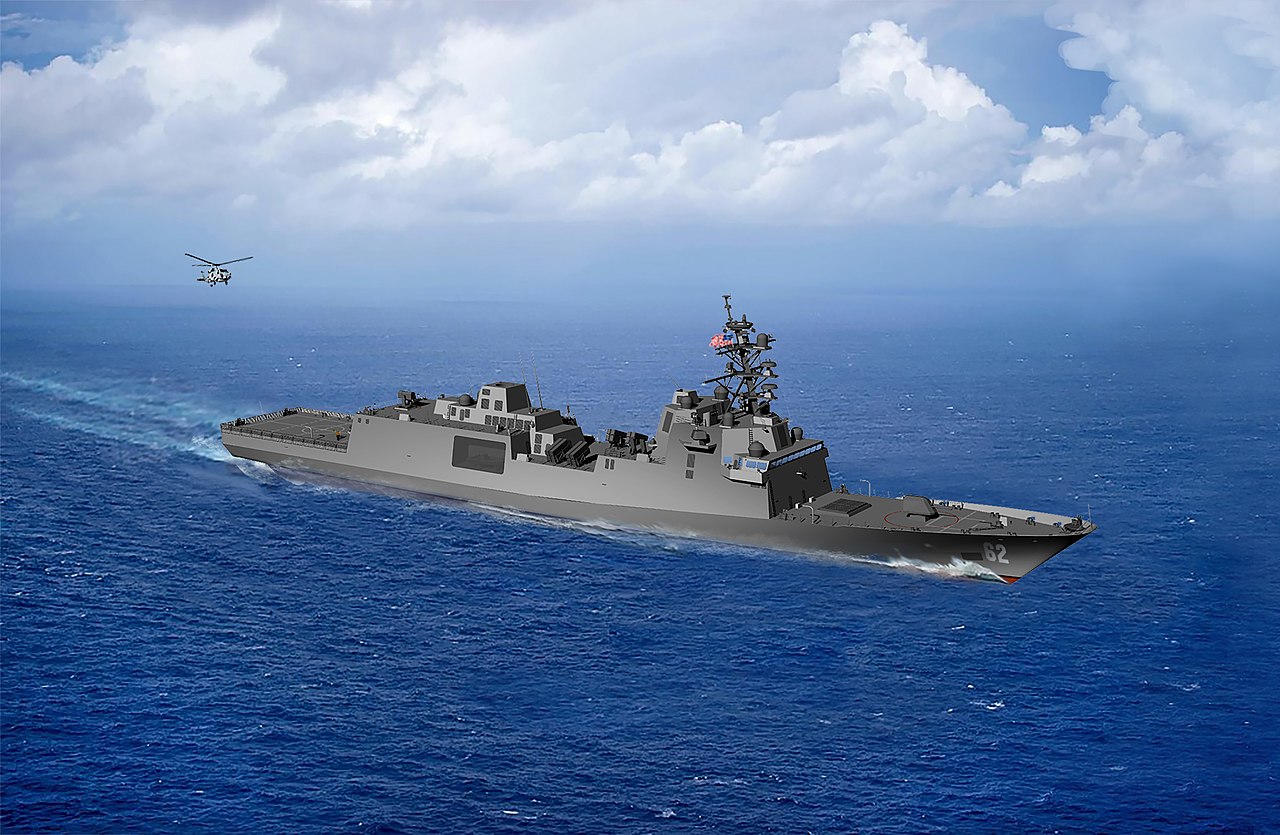
The U.S. Navy has a congressionally mandated battle force requirement of 355 ships. It has 287 today — a 68-ship deficit that grows every year because retirements outpace deliveries. Deliveries are constrained because HII and GD/NASSCO, the two Tier-1 yards, are already operating above rated capacity on current contracted programs. Unmanned surface vessels, combat logistics force oilers, amphibious platforms, frigates, and dry cargo ships all compete for the same overcommitted production resources. Congress has appropriated $47.4 billion for shipbuilding in FY2026, with more signaled. The peacetime requirement alone calls for 35–50 new government vessels per year across Navy, Military Sealift Command, Coast Guard, and NOAA.
The funding exists. The contracts are written. The yards cannot execute at the pace required. No optimization inside existing structures changes the throughput ceiling. The constraint is production capacity — which cannot be expanded meaningfully within legacy footprints.
This is not a threat scenario argument. It does not require a war, a crisis, or even an elevated risk environment to be true. The U.S. Navy cannot build the ships it needs — combatants and noncombatants alike — in any timeline that sustains American global power. The fleet deficit stands at 68 ships and grows every year because retirements outpace deliveries, and deliveries are constrained by a domestic industrial base already running above rated capacity on current contracted programs. Congress has appropriated $47.4 billion for shipbuilding in FY2026 — and signaled more to come. The constraint is not funding or political will. It is production capacity that does not exist.
The country’s shipbuilding industrial base crisis is documented in the Navy’s own public statements and in multiple bipartisan legislative findings. This is not a contested premise. What is contested is whether the response will be adequate and fast enough. TMHG is part of that response.
TMHG pursues the best available work across commercial and defense markets simultaneously. The total domestic demand far exceeds what the entire industry can address — every operating yard is at or above rated capacity. TMHG wins work on throughput, cost, and schedule. No single program, customer, or budget cycle gates the others. The facility sequences the highest value-density available work into every production window, continuously.
The FY2026 Navy shipbuilding budget is $47.4 billion — the largest since the Reagan buildup. Legal authority is in place. Appropriations are written. The problem is not money or political will. It is production capacity that does not exist at the scale required. TMHG is building what Congress has already funded and the country cannot currently source domestically.
THE WINDOW IS OPEN. THE ARGUMENTS FOR DELAY DO NOT EXIST.
Reindustrialization requires 265 large Jones Act vessels. 92 exist. Legacy yards are operating at or near rated capacity sustaining those 92. There is no capacity to address the gap.
No conflict scenario required to make this case. Fleet deficit grows every year. Budget is appropriated. Production capacity — not funding, not authority — is the constraint.
Without domestic shipbuilding capacity, both paths end the same way — commercial decline and strategic exposure compound until neither is recoverable on any reasonable timeline.
The U.S. shipbuilding market does not have a competition problem. Every operating yard is at or above rated capacity. In that environment, TMHG does not displace existing builders — the total demand far exceeds what the entire domestic industry can address. TMHG pursues the best available work across commercial and defense markets, and wins it on throughput, cost, and schedule.
A 4th-generation production model running continuously moves significantly more compensated gross tonnage through each production slot than any legacy facility can match. That throughput advantage translates directly to margin selectivity: TMHG pursues the highest value-density available work in every production window, while the entire industry runs at full utilization. Everyone in U.S. shipbuilding will be busy. The question is who produces the most revenue per production slot and the best margin at volume.
Several conditions have converged simultaneously that have not previously coexisted: bipartisan legislative commitment to domestic shipbuilding at a scope and durability that is exceptional; a Navy that has publicly and explicitly documented its own industrial base crisis; executive branch priorities aligned with permitting and investment in exactly this kind of infrastructure; and a capital market beginning to recognize the scale of the structural opportunity.
The capital flowing toward domestic shipbuilding will concentrate around ventures with credible plans and the capability to execute them. TMHG is structured to be that venture — not the first attempt, but the best one. The right production model, the right team, the right capital structure, and the full operational package required to actually deliver. Ventures that lack any one of those components will consume capital and fail. The country cannot afford that outcome, and investors cannot afford to back it.
Hero: USNS Montford Point (T-MLP-1) & USNS Bob Hope (T-AKR-300) with LCAC, Oct 2014 — U.S. Navy / Public Domain.
Commercial: Crude oil tanker Eagle San Diego — Jordanroderick / Wikimedia Commons / Public Domain.
Security: USNS Tippecanoe (T-AO 199), Indian Ocean, Oct 2008 — U.S. Navy / Public Domain.
Defense: FFG(X) guided-missile frigate artist rendering, Apr 2020 — U.S. Navy / Public Domain.